Blog
Air Conditioning Heating
Professional recommendations and seasonal strategies from our seasoned technicians.
- 1
- ...
- 7
4.8 Stars (442 Reviews)
Professional recommendations and seasonal strategies from our seasoned technicians.
A house that cools fine downstairs but stays hot upstairs almost never has a broken air conditioner. The system is working; the problem is that the cooling is not distributed evenly between the floors. Heat rises,... Continue Reading
A central air conditioner has two halves that run together: the indoor air handler that moves air through the house, and the outdoor condenser that releases the heat. When the indoor unit hums along but the outdoor... Continue Reading
A heat pump cools a home the same way an air conditioner does, by moving heat out of the house, but it has one part no air conditioner has: a reversing valve that flips the refrigerant flow to switch between heating... Continue Reading
A properly working air conditioner runs in cycles of about 15 to 20 minutes, two or three times an hour, and shuts off once the thermostat reaches its target. An AC that runs nonstop has stopped responding to that... Continue Reading
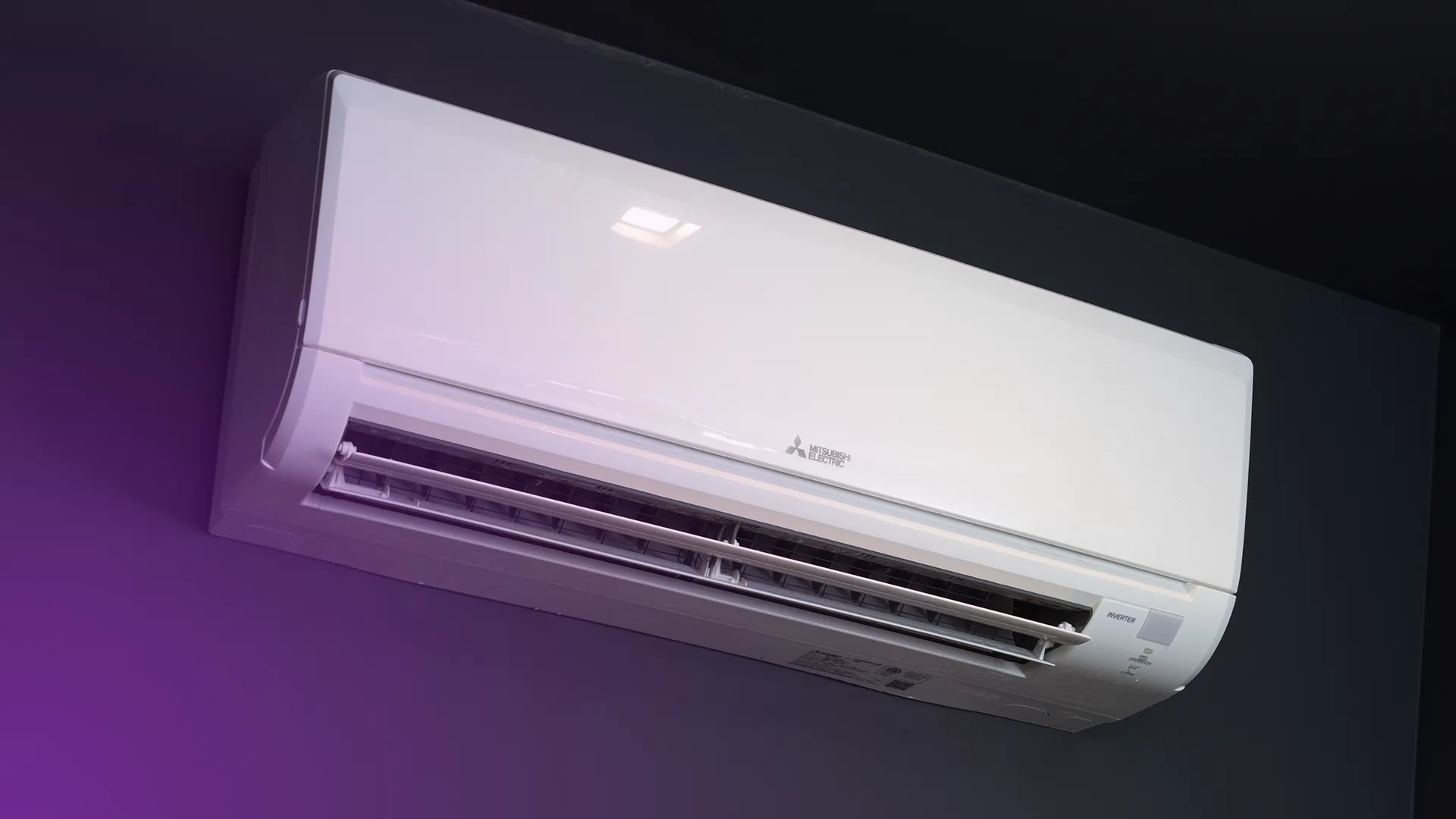
A mini split that's running but not cooling usually comes down to one of three things: the remote settings, the airflow, or the refrigerant. Since everything on a mini split runs off that little handheld remote, the... Continue Reading
Water dripping from an air vent is condensation, not a leak from the system. A supply register carries air chilled to around 55 degrees, and when the humid air in the room meets that cold metal, the moisture in it... Continue Reading
A musty smell coming from an air conditioner is mold, and it is growing somewhere inside the system that stays damp. Usually that is the evaporator coil, the drain pan, or the ductwork. The coil pulls moisture out of... Continue Reading
A central air conditioner pulls up to 20 gallons of water out of the indoor air on a humid day, and all of it exits through a single three-quarter-inch PVC condensate line. When that line clogs, the water has nowhere... Continue Reading
A gravity furnace heats a house without a fan. Warm air leaving the heat exchanger is less dense than the surrounding air, so it rises on its own through large ducts and out of floor or wall registers. Cool air,... Continue Reading