A house that cools fine downstairs but stays hot upstairs almost never has a broken air conditioner. The system is working; the problem is that the cooling is not distributed evenly between the floors. Heat rises, the second floor absorbs sun through the roof all day, and most homes run a single system sized and ducted in a way that leaves the upper floor short. Understanding why the upstairs runs hot points to fixes that actually balance the home rather than just making the AC work harder.
Several causes usually stack together, and in the South Bay the roof load matters more than most homeowners expect. Long sunny afternoons heat the attic well past outdoor temperature, and that heat presses down into the rooms below. Sorting out an uneven home means addressing both the heat coming in and the cool air that is not reaching the top floor.
Heat Rises, and the Second Floor Pays for It
The simplest physics is working against an upstairs. Warm air is less dense and rises, so heat from the lower floor naturally migrates up and collects on the second story. At the same time, the upstairs sits directly under the attic and roof, which absorb sun all day. On a clear afternoon an attic can reach well above the outdoor temperature, and without enough insulation between the attic and the ceilings, that heat radiates down into the upstairs rooms. This is why an upstairs can stay hot even with the AC running hard.
Attic insulation and ventilation are the first things worth checking, because no amount of extra cooling keeps up with a roof dumping heat into the rooms below.
Ducts That Struggle to Push Air Upstairs
Most homes cool both floors from one system, and the ductwork to the upstairs has to fight gravity to push cool air up while the same system easily feeds the closer downstairs rooms. If the upstairs ducts are undersized, too long, poorly laid out, or leaking in the attic, they lose cooling capacity before the air ever reaches the vents. Leaks are especially costly, since ducts running through a hot attic can lose a large share of their cool air to the very space that is overheating the floor.
The condition and design of the ducts is one of the biggest factors in uneven cooling, which is worth understanding alongside the basics of how ductwork moves air through a home. Sealing leaks and correcting undersized runs often does more for a hot upstairs than any thermostat change.
A System Balanced for the Whole House, Not Each Floor
A single-zone system reads the temperature at one thermostat, usually downstairs, and shuts off when that spot is satisfied, even though the upstairs has not caught up. The result is a comfortable main floor and a warm second story every afternoon. Adjusting the balancing dampers in the ductwork can redirect more airflow upstairs, and closing down a few downstairs registers slightly can push more conditioned air to the floor that needs it.
Those are adjustments, not a redesign, and they are part of what a technician checks during a full system tune-up. When balancing is not enough, a zoning system with separate dampers and thermostats for each floor lets the upstairs and downstairs cool independently.
When the System Simply Cannot Keep Up
Sometimes the upstairs is hot because the system is undersized for the home or is aging and losing capacity, and the shortfall shows up first on the hardest floor to cool. An AC that runs constantly and still leaves the upstairs warm on the hottest days may be reaching the limit of what it can deliver, which overlaps with the broader reasons an air conditioner struggles to cool the house. The difference with an uneven home is that downstairs stays comfortable while only the upper floor falls behind.
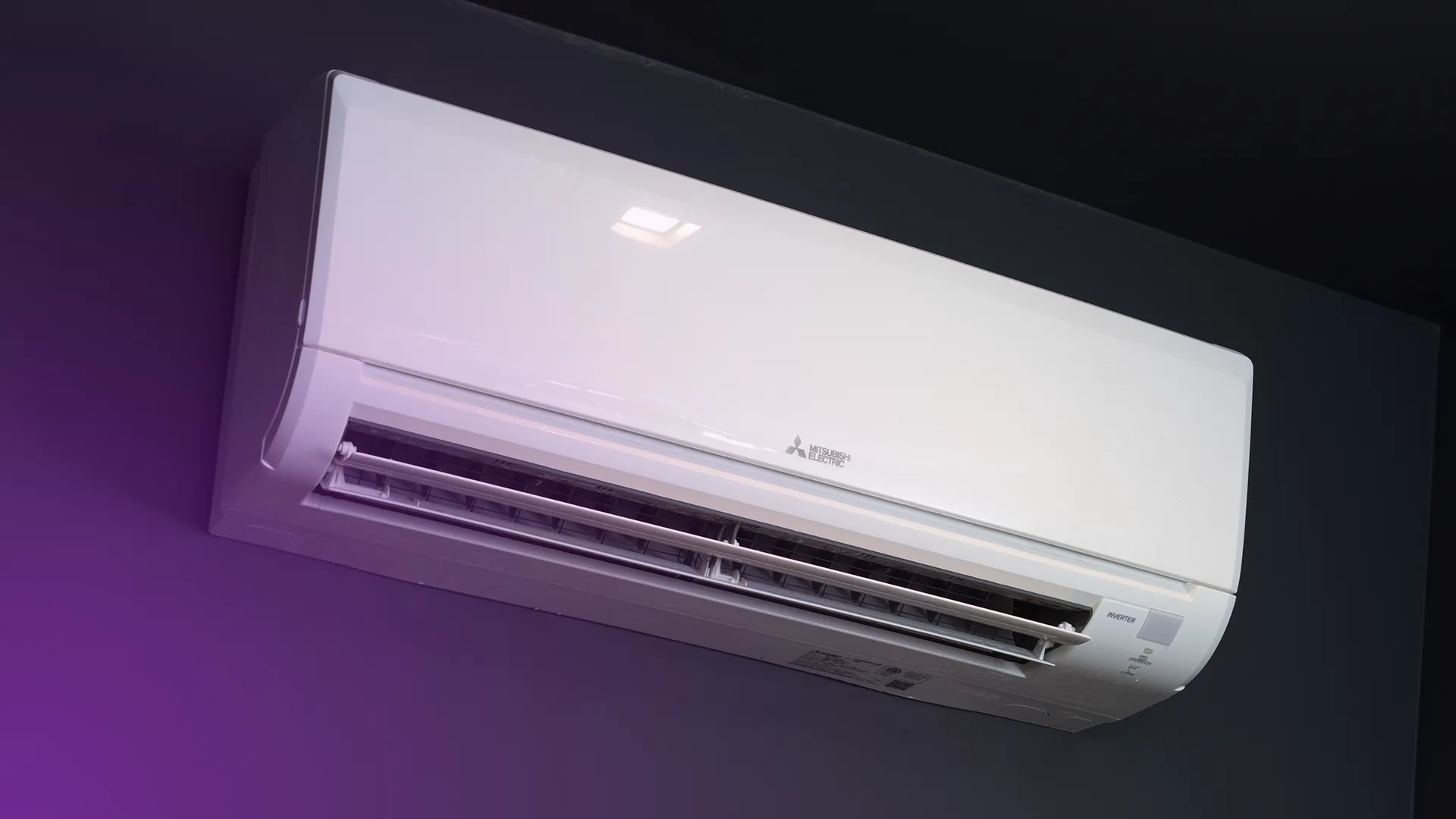
For a stubborn hot room or a converted upstairs space that the ductwork was never designed to reach, a ductless mini split adds dedicated cooling to that floor without touching the existing ducts, which is often the cleanest fix for a second story that has always run hot.
What Helps Right Away, and What Needs a Pro
A few steps help immediately. Setting the thermostat fan to on rather than auto keeps air circulating between floors and evens out the temperature difference, even when the system is not actively cooling. Making sure upstairs vents are fully open and unblocked by furniture, and keeping blinds closed on sun-facing windows during the afternoon, both reduce the load. Fresh filters keep airflow strong enough to reach the upper floor.
Beyond that, the lasting fixes, sealing and resizing ducts, adjusting balancing dampers, adding insulation, or installing zoning or a mini split, need a technician to measure airflow and diagnose where the cooling is being lost. Guessing at duct changes without measuring often shifts the problem rather than solving it.
Hot Upstairs in the South Bay?
Total Home Environmental diagnoses and fixes uneven cooling across Torrance, Redondo Beach, Manhattan Beach, Long Beach, and the surrounding South Bay. Our technicians measure airflow to each floor, find and seal duct leaks, adjust balancing dampers, and recommend zoning or ductless cooling where the ductwork cannot keep up, so the upstairs finally matches the rest of the house. Before another summer of sleeping in the heat, let us even it out.
Call 310-361-3792 or schedule online at totalhomeenvironmental.com.