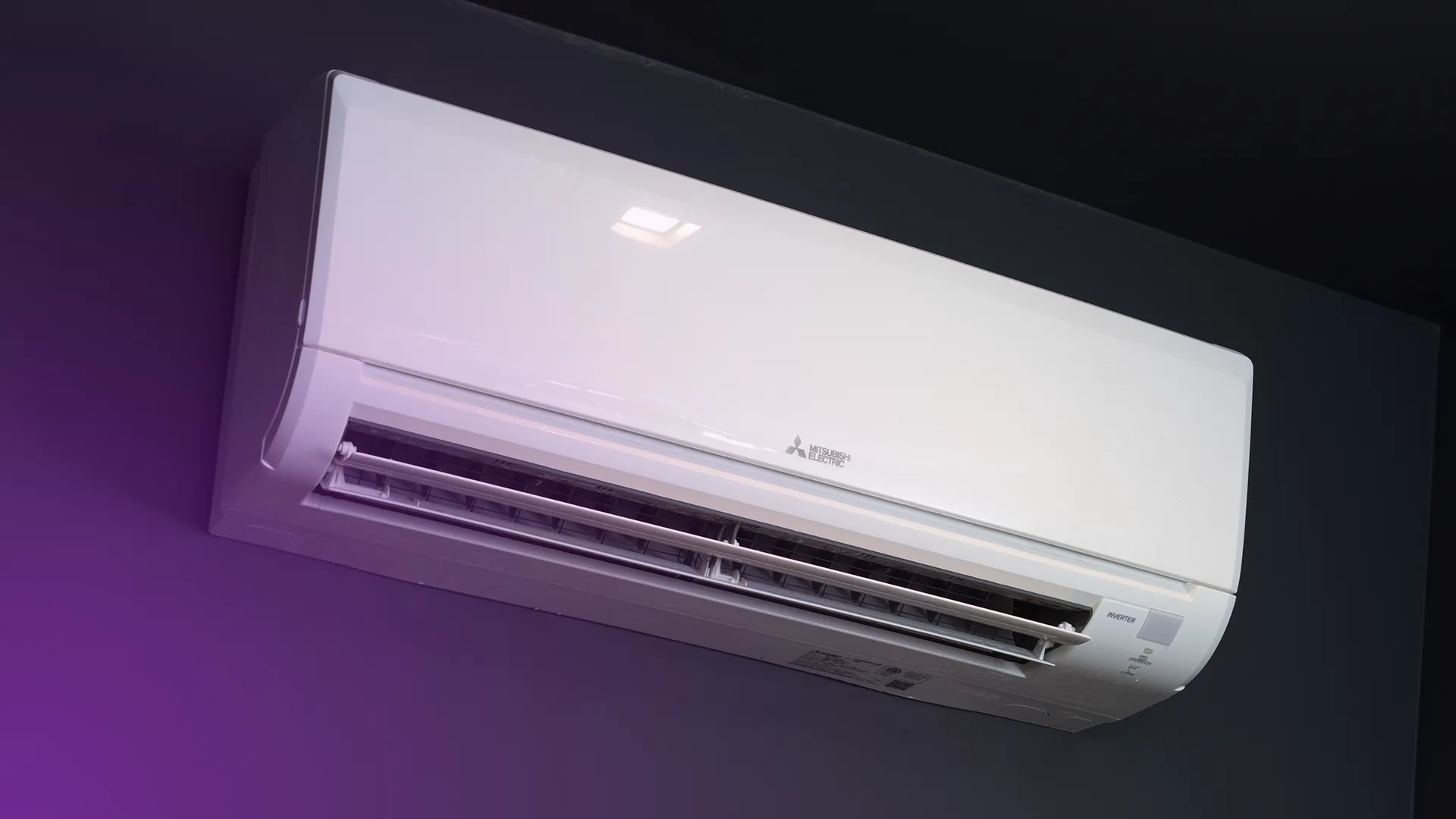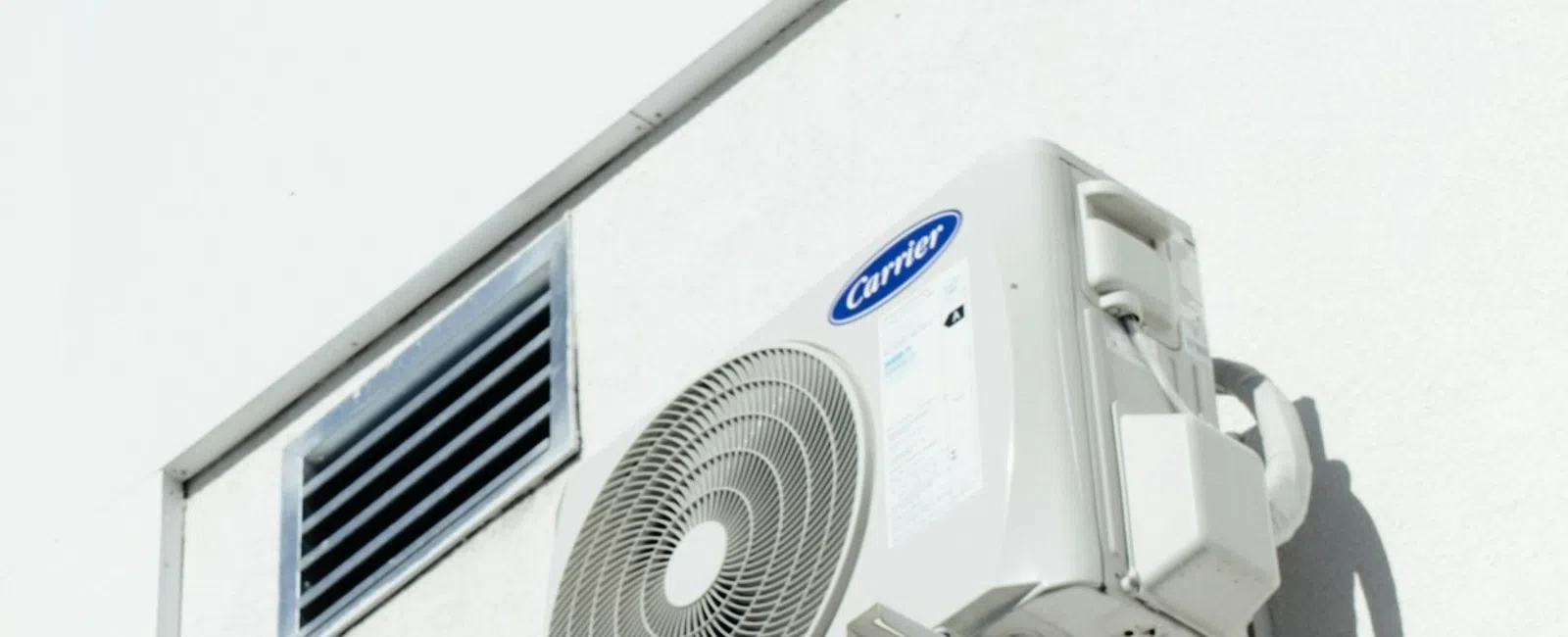
A central air conditioner has two halves that run together: the indoor air handler that moves air through the house, and the outdoor condenser that releases the heat. When the indoor unit hums along but the outdoor unit sits silent, the system cannot cool at all, because the half that rejects heat never starts. If air is still moving from the vents but the outdoor unit is dead, the fault is almost always in the power, the controls, or a single failed part in the outdoor cabinet, not in the system as a whole.
Some of those causes are safe to check in a few minutes. Others sit inside a high-voltage panel and belong to a technician. Along the coast, salt air corrodes the outdoor electrical contacts faster than inland conditions do, so a failed contactor or a pitted disconnect turns up more often on South Bay systems than most homeowners expect.
Start With the Power to the Outdoor Unit
The first thing to rule out is whether the outdoor unit is getting power at all. Most condensers run on their own 240-volt circuit, so a breaker for the outdoor unit can trip while the indoor air handler, on a separate circuit, keeps running normally. That is exactly why the inside can work while the outside stays dead. Check the main electrical panel for a breaker that has moved to the middle or off position, and reset it once.
There is also a second power cutoff worth knowing about. A disconnect box mounted on the exterior wall near the condenser carries a pull-out block or a switch, and many of these hold a pair of fuses. A blown disconnect fuse cuts power to the outdoor unit only, leaving the indoor side unaffected. Confirming the disconnect is fully seated and switched on is a safe check. Testing or replacing the fuses inside it is better left to a technician, since the block feeds line voltage.
A Failed Capacitor
When the outdoor unit has power but still will not start, the capacitor is the most common culprit. The capacitor stores the jolt of energy the compressor and condenser fan need to start turning, and it weakens with age and heat until it can no longer deliver that push. A unit with a failed capacitor may hum without starting, or do nothing at all. Coastal heat load wears capacitors out faster than their rated lifespan suggests.
A capacitor holds a dangerous charge even after the power is off, so this is not a homeowner repair. It is the same part behind many no-start calls, covered in depth in our post on AC capacitor replacement, and a technician can test and replace it safely.
A Worn Contactor
The contactor is the electrical switch that sends power to the outdoor unit when the thermostat calls for cooling. Its contacts arc a little every time they close, and over years they pit, corrode, or stick. When the contactor fails open, it never passes power to the compressor and fan, so the outdoor unit stays completely dead even though everything upstream is fine. Insects crawling into the panel and getting caught in the contacts are a surprisingly common cause, and coastal salt corrosion speeds the wear.
A contactor is an inexpensive part, but it sits in a live panel, so replacement is a technician job. The same contact wear shows up across other AC electrical problems as well.
The Thermostat Is Not Sending the Signal
Sometimes the outdoor unit stays off because it is never told to start. The thermostat sends a low-voltage signal that tells the contactor to close, and if that signal never arrives, the outdoor unit sits idle while the indoor fan, which can run independently, keeps going. A thermostat set to fan rather than cool, dead thermostat batteries, or a break in the low-voltage wiring between the thermostat and the outdoor unit can all cut the signal.
Confirm the thermostat is set to cool with the temperature below the room reading, and replace the batteries if it takes them. If the settings are right and the outdoor unit still will not start, the issue may be in the wiring or the control board, which traces back to the same signal path behind a thermostat that is not working correctly.
What to Check Yourself, and Where to Stop
A few checks are genuinely safe and worth doing before calling. Confirm the thermostat is set to cool and its batteries are fresh, reset the outdoor breaker one time, and make sure the exterior disconnect switch is fully engaged. These steps resolve a real share of no-start calls at no cost.
Past that point, the work involves line voltage, stored capacitor charge, and a live electrical panel. A breaker that trips again immediately after resetting, a disconnect that has blown its fuses, or a unit that has power but will not start all point to a fault that needs a meter and professional diagnosis rather than another reset.
Why a Dead Outdoor Unit Should Not Wait
An outdoor unit that will not start means no cooling at all, and on a hot South Bay afternoon an indoor air handler running against a dead condenser only circulates warm air while drawing power. Repeatedly resetting a breaker that keeps tripping, or forcing a unit that hums but will not start, risks turning an inexpensive capacitor or contactor repair into compressor damage. Ruling out the safe checks and then bringing in a technician for the electrical side is what keeps a simple no-start from becoming a major repair.
Outside AC Unit Won't Start in the South Bay?
Total Home Environmental diagnoses and repairs outdoor units that will not turn on across Torrance, Redondo Beach, Manhattan Beach, Long Beach, and the surrounding South Bay. Our technicians test the disconnect, capacitor, contactor, and thermostat signal to find why the condenser is dead, and we carry the common parts to fix it in one visit. Before a warm afternoon and a no-start turn into compressor damage, let us find the cause.
Call 310-340-6023 today.