
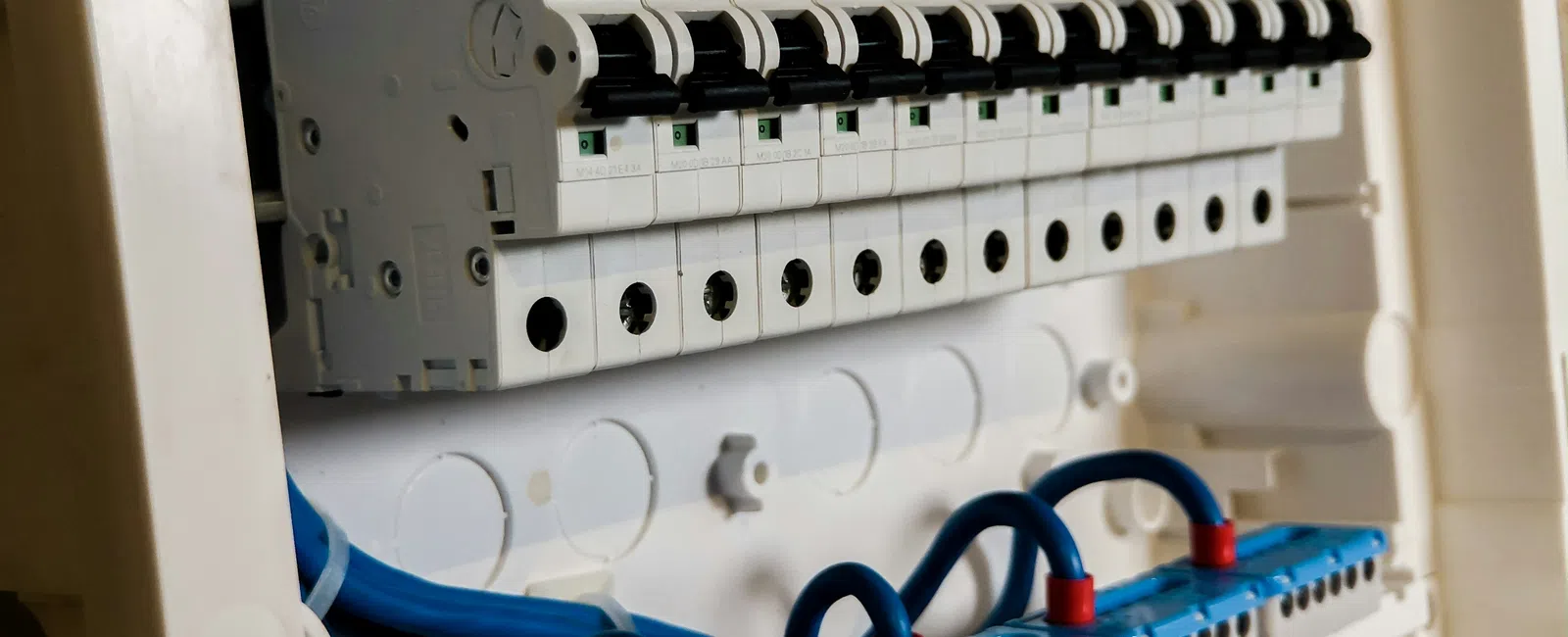
A circuit breaker trips because it sensed current above its rated limit and cut power to stop wiring from overheating. When an air conditioner keeps tripping the breaker, the breaker is doing its job correctly and pointing at a real electrical fault somewhere in the system. The trip is the symptom, not the problem, and resetting it repeatedly forces high current through a fault the breaker was built to interrupt, which is how a failing part becomes a burned wire or a fire.
The causes range from a clogged filter that overworks the system to a compressor drawing locked-rotor current on startup. Some are safe to check in a few minutes while others mean the unit should stay off until a technician arrives. Knowing which is which protects both the equipment and the house.
Start With When the Breaker Trips
The timing of the trip narrows the cause faster than anything else. A breaker that trips the instant the system calls for cooling before the outdoor unit has time to run usually points to a short circuit or a ground fault in the wiring or a component. A breaker that holds for several minutes and then trips after the compressor has been laboring points to an overheating or overloaded part. A breaker that trips only on the hottest afternoons, when the system runs longest and draws the most current, points to a component that is marginal and failing under load rather than dead.
Note the pattern before you reset anything. It is the most useful piece of information a technician can start from.
Causes You Can Safely Check
A dirty air filter is the most common benign cause. When the filter clogs, airflow across the evaporator drops, the system runs longer and hotter to reach the thermostat setting, and the added electrical draw can push a marginal circuit over its limit. Replacing a filter takes a minute and costs a few dollars, and it resolves a meaningful share of heat-related trips. The same airflow restriction is a frequent reason an air conditioner struggles to cool the house, so it is worth ruling out first.
A dirty outdoor condenser coil creates the same overload from the other side. When the coil is packed with dust, grass, and the salt-laden grime common near the coast, the unit cannot shed heat, head pressure climbs, and the compressor draws more current to keep working. Clearing debris from around the outdoor unit and gently rinsing the fins with the power off can lower that draw. A blocked return vent or closed supply registers restrict airflow the same way, so confirm nothing is obstructing them.
These checks are safe because they involve no electrical contact. If a fresh filter, a clean coil, and open airflow do not stop the tripping, the cause is electrical and the fix belongs to a technician.
Electrical Causes That Need a Professional
A Failing Capacitor
The capacitor gives the compressor and fan motor the surge they need to start. As it weakens, the compressor struggles to start, draws excessive current in the attempt, and trips the breaker. A capacitor holds a dangerous stored charge even after the power is off, which is why replacing a failing capacitor is a technician's job rather than a homeowner repair.
A Compressor Drawing Locked-Rotor Current
This is the failure that makes repeated resets risky. A compressor that is seizing or has a failing motor winding can draw locked-rotor current, several times its normal load, every time it tries to start. That surge trips the breaker almost immediately. Continuing to reset the breaker feeds that enormous current into a dying compressor and its wiring, and the compressor is the most expensive component in the entire system to replace. A breaker that trips instantly on startup, paired with a hard-to-start or silent compressor, is one of the clearest signs you have an AC emergency and the unit should stay off until it is diagnosed.
A Ground Fault or Short in the Wiring
Wiring insulation degrades over time from heat, vibration, rodents, and age. When a hot wire contacts a ground or another conductor, it creates a direct path that trips the breaker instantly to prevent a fire. Compressor windings can also short to ground internally as they fail, which reads the same way at the panel. A short or ground fault is not something to reset, it is the exact condition the breaker exists to stop.
A Worn Contactor or Loose Connections
The contactor switches high-voltage power to the compressor and fan. Pitted, corroded, or stuck contacts and loose lugs create resistance and heat that can trip the breaker. Loose electrical connections anywhere in the circuit generate heat at the connection point and are a common, quietly dangerous cause that only shows up when you track down the electrical fault under inspection.
A Failing Breaker Itself
Breakers wear out. One that has tripped many times, or has aged and weakened, can begin tripping at currents below its rating. This is diagnosed by ruling out the faults above first, since assuming a bad breaker when the real problem is a shorting compressor would be a dangerous mistake.
How to Tell Urgent From Routine
The table below maps the trip pattern to the likely cause and the right response.
When It Trips |
Likely Cause |
What to Do |
After running a while on hot days |
Dirty filter, dirty coil, or restricted airflow |
Replace filter, clear the outdoor unit, confirm open vents |
Instantly on startup, compressor hard to start |
Weak capacitor or compressor drawing locked-rotor current |
Shut the system off, call a technician, do not keep resetting |
Instantly, with a burning smell or scorch marks |
Short circuit or ground fault in wiring or compressor |
Leave the breaker off and call for service immediately |
Intermittently, no clear pattern |
Worn contactor, loose connection, or aging breaker |
Schedule an inspection before it worsens |
Why Coastal Conditions Add to the Load
Homes across Torrance, Redondo Beach, Manhattan Beach, and the wider South Bay sit in salt air that corrodes outdoor electrical contacts and coil fins faster than inland conditions do. Corroded contactor contacts and grime-caked coils both raise the current an air conditioner draws, which means coastal systems reach the breaker's trip threshold sooner as they age. Keeping up with outdoor coil cleaning and an electrical check during maintenance catches these conditions before they start tripping the breaker in the middle of a heat wave.
The One Rule That Protects Your System
Reset the breaker once. If it holds, monitor the system and note whether it trips again. If it trips a second time, stop, and leave it off until it is diagnosed. Each reset into a genuine fault sends fault-level current through the wiring and components, and the difference between a capacitor replacement and a compressor replacement often comes down to how many times the breaker was reset before someone made the call.
Is Your AC Tripping the Breaker in the South Bay?
We diagnose breaker trips across Torrance, Redondo Beach, Manhattan Beach, Long Beach, and the surrounding South Bay. Our technicians test the capacitor, compressor draw, contactor, and wiring under load to find the fault instead of guessing, and we carry the common parts to fix it in one visit. Before another reset turns a small repair into a compressor replacement, contact us and let us find the cause.


