
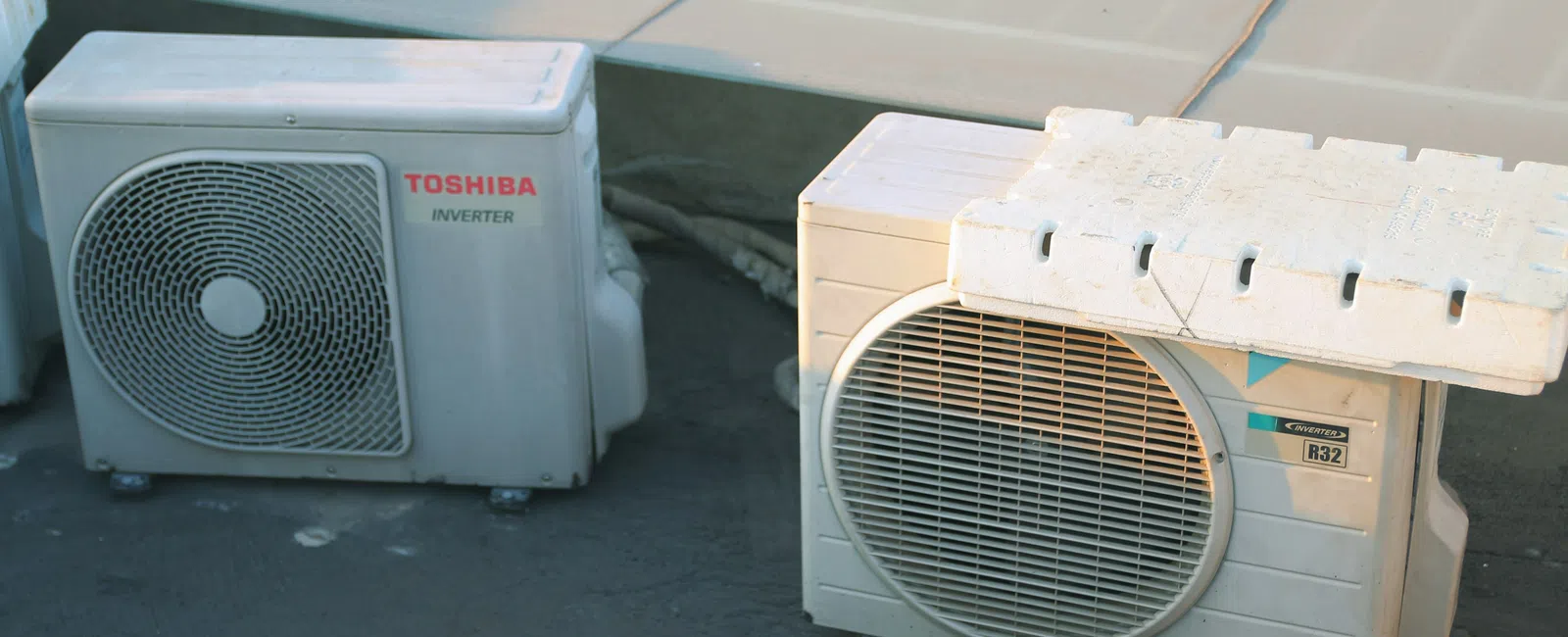
A mini split that's running but not cooling usually comes down to one of three things: the remote settings, the airflow, or the refrigerant. Since everything on a mini split runs off that little handheld remote, the number one reason people call is also the easiest to miss, the unit's just set to fan or dry instead of cool. After that, it ranges from a filter you can rinse off yourself to a refrigerant leak that really needs a pro.
Living near the coast adds one more thing to watch. Salt air is hard on the outdoor unit, and it slowly eats away at the refrigerant connections these systems rely on, so leaks show up more often here than they do further inland. The trick is to work through it in order, starting at the remote and ending at the refrigerant.
Check the Remote and the Mode First
A mini split will blow room-temperature air and look like it is working while doing nothing to cool, simply because it is in the wrong mode. Confirm the remote is set to cool, shown by a snowflake icon on most units, rather than fan, dry, or auto. Then check that the set temperature is actually below the current room temperature, since a unit set to 75 in a 74 degree room will not run the compressor at all. Fan speed set to low or quiet can also make the output feel weak even when the system is cooling correctly.
These settings get changed by accident more than any other cause, often by a remote handled by different people in the house. If the mode and temperature are right and the air is still not cold, the problem moves to airflow.
Clean the Filters and Clear Both Units
Mini splits have easily accessible filters in the indoor head that clog faster than many owners expect, especially in homes with pets or near construction. A clogged filter starves the system of airflow, which cuts cooling and can freeze the coil. Lifting the front panel of the indoor unit, sliding the filters out, and rinsing them clean takes a few minutes and resolves a large share of weak-cooling complaints.
The outdoor unit needs clear airflow too. Leaves, dirt, and debris packed against the condenser coil trap the heat the system is trying to release, so keeping a two-foot radius around the outdoor unit clear matters. With the power off, the coil fins can be rinsed gently with a garden hose from the inside out, never a pressure washer, which bends the fins. This is the same principle behind professional versus DIY coil cleaning on any system, and it matters more on the coast where salt grime builds on the fins.
A Frozen Coil
Ice on the indoor coil or the refrigerant lines drops cooling output sharply even while the unit runs. A frozen coil is almost always a symptom of something upstream, usually restricted airflow from a dirty filter or low refrigerant, rather than a fault on its own. The first step is turning the system off completely and letting the ice melt fully, which can take a few hours, then cleaning the filter before restarting. If the coil freezes again after a thaw and a filter change, the cause is refrigerant or a failing blower, and that needs a technician.
Low Refrigerant From a Leak
A mini split relies on refrigerant to carry heat out of the room, and a system low on it will run continuously while barely cooling. Refrigerant is not consumed, so a low level always means a leak, and on ductless systems the leak is often at a flared connection where the refrigerant lines join the indoor or outdoor unit. Poor initial installation and coastal corrosion are both common reasons those flares weaken over time.
Locating a leak, repairing it, and recharging the system to the correct weight requires an EPA-certified technician and the right gauges, the same refrigerant realities covered in our post on what causes AC refrigerant leaks. Simply adding refrigerant without fixing the leak is a temporary patch that fails again and can damage the compressor.
Error Codes and Electrical Faults
When a mini split stops cooling and flashes a light or shows a code on the indoor unit, the system is reporting a specific fault, from a sensor failure to a communication error between the indoor and outdoor units. Those codes are brand-specific and rarely mean anything to a homeowner without the service documentation, but they give a technician a direct starting point. A unit that will not power on at all, or that trips its breaker, points to an electrical fault that needs professional diagnosis rather than repeated resets.
Why Ductless Systems Deserve Coastal Specific Care
Mini splits are a strong fit for South Bay homes, which is why they anchor much of what we install, from ductless system basics to the benefits for Torrance homeowners. That same coastal setting means the outdoor unit fights salt corrosion year round, and a system that was slightly undersized at installation, a common issue covered in our guide to sizing a mini split, will keep up in mild spring weather and then fall behind in peak summer heat. Annual service that cleans the coils, checks the refrigerant charge, and inspects the flare connections catches these problems before a hot afternoon exposes them.
Mini Split Not Cooling in the South Bay?
Total Home Environmental diagnoses and repairs ductless mini splits across Torrance, Redondo Beach, Manhattan Beach, Long Beach, and the surrounding South Bay. Our technicians read the error codes, test the refrigerant charge, inspect the flare connections salt air attacks, and clean the coils that coastal grime builds on, so the system cools the way it did when it was installed. Before a warm afternoon turns a small refrigerant repair into a compressor replacement, let us find the cause.
Call 310-340-6326 today.


